

It is two in the morning. The mask has slipped again, the hose is tangled in the blankets, and you are wide awake wondering whether you can just stop.
Please do not stop without a plan. Sleep apnea is worth treating, and CPAP is not the only way to do it. This guide walks through every CPAP alternative, who each one tends to suit, and what the American Academy of Sleep Medicine and the National Heart, Lung, and Blood Institute say about them. One step comes before all of them: a proper diagnosis.
Is CPAP still the first choice for sleep apnea?
Yes. CPAP is still the first treatment most people try, and for a reason. The American Academy of Sleep Medicine says CPAP should generally be the first-line option for obstructive sleep apnea because it is better than an oral appliance at reducing breathing interruptions and improving oxygen levels (AASM guideline summary). NHLBI calls a PAP machine the most common treatment (NHLBI treatment page).
That does not make a leaky mask your fault. It means the first job is making CPAP livable, and the second is knowing your options if it never gets there.
Why CPAP is hard to live with
NHLBI lists the usual complaints: feeling claustrophobic or bothered by the noise, a mask that leaks or will not stay on, trouble falling asleep, and a dry mouth or a stuffy or runny nose. Dry eyes and nosebleeds can show up too.
Try these fixes before you give up
- Adjust the mask every night while you lie down with the machine on, so it seals properly.
- Wear the mask for part of the day, such as while you watch TV, to get used to how it feels.
- Ask your provider about a different mask, nasal pillows, a slower pressure ramp-up, a humidifier or a nasal spray.
Those tips come from NHLBI’s guidance on living with sleep apnea, which also says to be patient because adjusting can take time. If you have done all of this and CPAP still is not working, that is the moment to ask about alternatives.
What are the alternatives to CPAP?
There are five main categories: an oral appliance, lifestyle and sleeping-position changes, medicine, mouth and facial muscle exercises, and surgery. NHLBI lists all five, and which one fits depends on your test results.
- Oral appliance. A custom mouthpiece you wear only while you sleep. It holds your jaw or tongue forward to keep the airway open. This is the option dentists provide, and the next section covers it in detail.
- Lifestyle and position. NHLBI says healthy lifestyle changes can be very effective: regular physical activity, healthy sleep habits and weight, less alcohol and caffeine, and quitting smoking. Your provider may also suggest sleeping on your side instead of your back.
- Medicine. NHLBI notes that the FDA has approved an injectable weight-loss medicine for adults with moderate to severe sleep apnea and obesity. It can cause serious side effects in some people, so it is a conversation for your physician.
- Mouth and facial muscle exercises. Called orofacial therapy, these exercises may help strengthen the tongue and the muscles that control the lips, upper airway and face.
- Surgery. NHLBI’s list includes an implanted nerve stimulator (hypoglossal nerve stimulation), tonsil removal, removing tissue from the mouth and throat, jaw advancement and, when obesity contributes and other treatments have not worked, weight-loss surgery.
An oral appliance is a much smaller step than surgery, which is why it is usually the first alternative worth discussing with your sleep physician.
Do oral appliances work as well as CPAP?
Not usually, but they can still be the right choice. The AASM guideline finds CPAP better at reducing breathing interruptions and improving oxygen levels. It also says sleep physicians should consider an oral appliance for adults who cannot tolerate CPAP or prefer another treatment. AASM’s patient guide to oral appliance therapy adds that appliances are most helpful in mild to moderate sleep apnea.
Comfort matters here, because a treatment only works on the nights you use it.
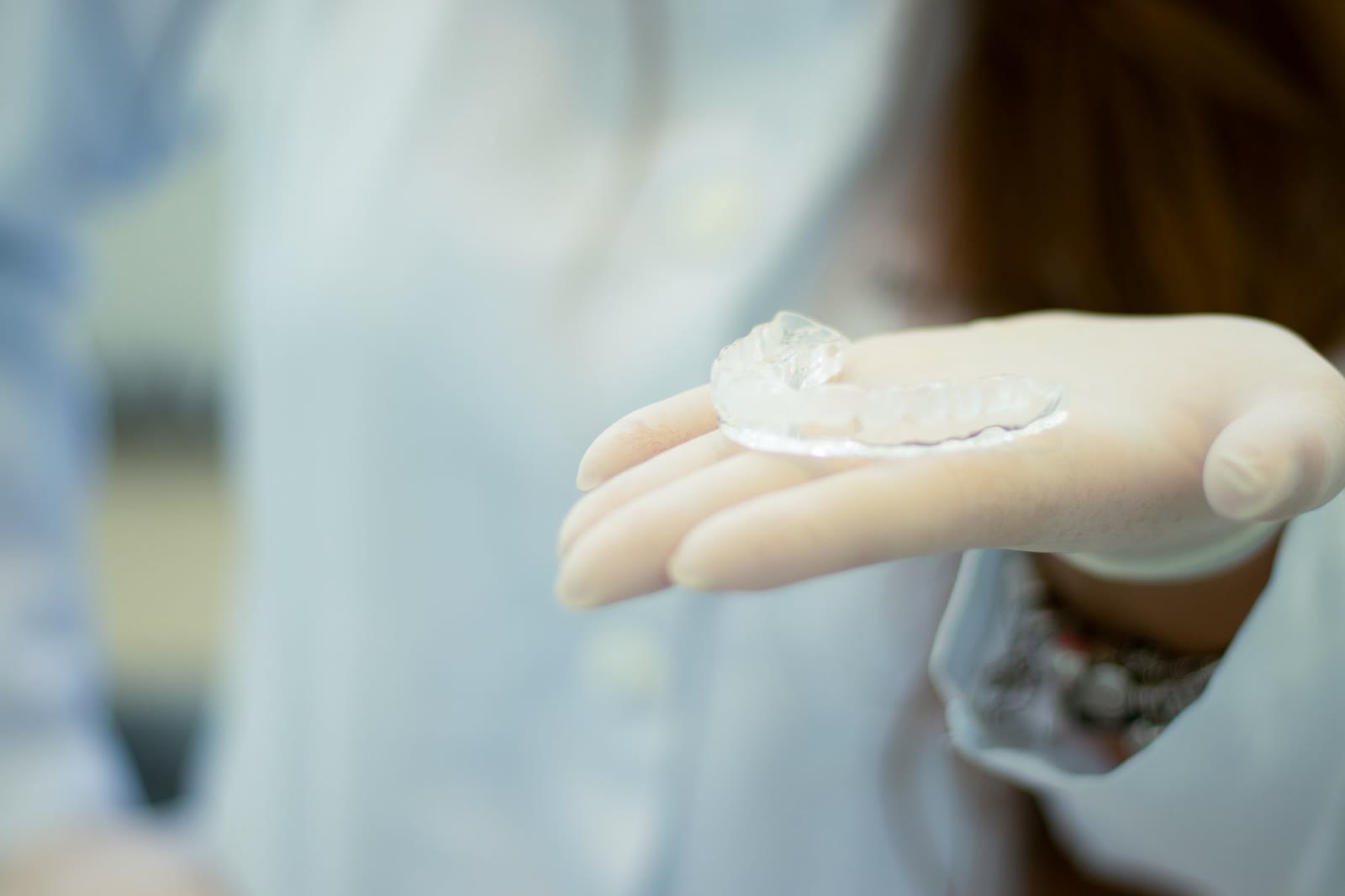
How a sleep apnea mouthpiece works
It looks like a sports mouth guard or an orthodontic retainer, and you wear it only during sleep. The most widely used type moves the lower jaw forward and down slightly to keep the airway open. Another type holds the tongue in place.
What it feels like, and the side effects
Expect an adjustment period. AASM says it takes most patients a few weeks to get used to sleeping with one. Frequent but minor effects include extra saliva, a dry mouth, tooth and jaw discomfort and temporary bite changes. Less often, people have jaw pain, permanent bite changes or jaw joint (TMJ) symptoms. Your dental and sleep team can manage these, which is why follow-up matters.
Why it has to be custom and dentist-fitted
The guideline suggests a custom, adjustable appliance provided by a qualified dentist, and AASM’s patient site says over-the-counter devices are not recommended for snoring or sleep apnea. After you are fitted, NHLBI says you may need to see your dentist after six months and then every year, so the device can be checked, adjusted or replaced.
Do you need a sleep test before trying a CPAP alternative?
Yes. A sleep doctor has to diagnose sleep apnea first, using a sleep study or a home sleep apnea test. Only then can a dentist make an oral appliance. A dentist cannot make the diagnosis. The AASM guideline says the same about snoring alone, because snoring is a cardinal symptom of sleep apnea and a physician should rule it in or out.
A home sleep test is exactly what it sounds like: a small device you wear for one night in your own bed. Love To Smile offers a take-home sleep study as a screening step, and we help coordinate your care with your physician, who makes the diagnosis. It is not a diagnosis on its own.
Testing does not end when treatment starts. AASM says your dentist works with your sleep doctor, and a follow-up sleep test may be used to confirm the appliance is adjusted correctly and is treating the sleep apnea. NHLBI adds that a diagnosis means regular checkups, and you may repeat your sleep study, especially if your weight changes a lot.
Which CPAP alternative should you ask about?
Answer three questions to see which conversation to have next. One of the results tells you to keep your CPAP, because sometimes that is the right answer.
Which CPAP alternative should you ask about?
Three quick questions. This is a planning aid for your next conversation with a doctor, not a diagnosis.
Not sleeping well, or not sure your CPAP is the right fit? Talk it through with our team.
Ask about sleep apnea careDo nasal strips or mouth tape count as CPAP alternatives?
No. They are popular, and so are store-bought mouthpieces, but none of them is a sleep apnea treatment. NHLBI’s treatment list covers lifestyle changes, PAP, medicines, oral devices, muscle exercises and surgery. It does not include nasal strips or mouth tape.
What should you ask your doctor about CPAP alternatives?
Bring a short list to your appointment. These five questions cover most of what matters:
- What is my sleep apnea severity?Everything else depends on this rating.
- Is an oral appliance reasonable for my results?Say plainly what is going wrong with CPAP.
- Which dentist do you work with?AASM says dentists on a sleep team have special education in treating sleep apnea, so it is fair to ask about that training.
- When is my follow-up sleep test?A repeat test is how you know the appliance is working.
- What happens if it does not control my sleep apnea?Ask what the next option would be.
What does a dental visit for sleep apnea look like?
At Love To Smile, screening can start at a regular checkup. We ask how you are sleeping and look at your mouth and airway for clues. If something deserves a closer look, we coordinate with your physician, who makes the diagnosis. With a diagnosis in hand, we can fit a custom oral appliance made from impressions of your own teeth and help keep it adjusted. You can read how it works on our sleep apnea and snoring treatment page. For a step-by-step look at who does what, see our guide: can a dentist treat sleep apnea?
If your CPAP is the thing standing between you and a good night, we would rather help you find what works than watch you give up on sleep.
Common questions
Can a dentist treat sleep apnea instead of CPAP?
A dentist can make and adjust an oral appliance, but only after a sleep physician has diagnosed sleep apnea. For adults who cannot tolerate CPAP, the AASM guideline supports an oral appliance fitted by a qualified dentist, with follow-up testing.
Do oral appliances work as well as CPAP?
Usually not. The AASM guideline finds CPAP better at reducing breathing interruptions and improving oxygen levels, and AASM’s patient site says appliances help most in mild to moderate sleep apnea. For someone who cannot use CPAP at all, an appliance can still be worth discussing with a sleep physician.
Can I get a sleep apnea mouthpiece without a sleep study?
No. AASM’s patient site says a sleep doctor must diagnose you first, with a sleep study or a home sleep apnea test. A dentist then fits the appliance. Over-the-counter devices are not recommended.
How long does it take to get used to an oral appliance?
AASM says it takes most patients a few weeks. NHLBI adds that some discomfort is common after each adjustment until your mouth and facial muscles settle into the new fit. Tell your dentist if jaw pain or bite changes continue.
Can nasal strips or mouth tape replace CPAP?
No. Neither appears on NHLBI’s list of sleep apnea treatments. Strips can help with a stuffy nose, and mouth taping can be risky if you have undiagnosed sleep apnea. Get tested first.
Can I just stop using my CPAP if I hate it?
Please talk to your sleep provider first. Mask, noise and dryness problems can often be fixed with a different mask, a pressure change or a humidifier, and if CPAP truly is not working there are alternatives to discuss. NHLBI says untreated sleep apnea may raise your risk for heart and blood vessel disease and other conditions.
Ready to talk about sleeping better?
Tell us what is not working with CPAP, or whether you have ever been tested. We will explain your options in plain language and coordinate with your physician.
Sleep apnea is diagnosed by a physician. This page is general education, not medical advice.
Want answers like this at the top of your search results?
Add Love To Smile as a Preferred Source on GoogleRequest an appointment
We would love to hear from you. Send us a message and our team will reach out to get you scheduled.