

Can a dentist treat sleep apnea? Partly, and the part a dentist does is real. But it is one piece of a medical path, and it comes after a step that a dentist cannot take for you.
This guide walks through who does what: the screening at a dental visit, the diagnosis from a sleep physician, the custom oral appliance a qualified dentist can fit, and the follow-up that keeps it working. It also covers when a dental appliance is not the answer, which is more often than you might expect. For a full comparison of every treatment option, see our guide to CPAP alternatives for sleep apnea.
Can a dentist treat sleep apnea?
Yes, in one specific way. A qualified dentist can fit and manage a custom oral appliance for an adult with obstructive sleep apnea, once a physician has made the diagnosis. The joint guideline from the American Academy of Sleep Medicine (AASM) and the American Academy of Dental Sleep Medicine suggests that a qualified dentist provide this therapy using a custom, titratable appliance, which means one that can be adjusted (AASM guideline summary). The American Dental Association (ADA) says custom-made, titratable appliances can improve sleep-related breathing disorders in adults compared with no therapy or placebo devices (ADA statement).
It is a team effort. The ADA says these disorders are best treated through a collaborative model, with dentists working alongside colleagues in medicine.
Can a dentist diagnose sleep apnea?
No. A sleep physician makes the diagnosis. AASM’s patient guidance says a sleep doctor must diagnose you first, using a sleep study or a home sleep apnea test, and only then can a dentist fit you with an oral appliance (AASM patient guide to oral appliance therapy). The joint guideline goes further: even a diagnosis of primary snoring should come from a sleep physician and not a dentist, because snoring is a cardinal symptom of sleep apnea.
The National Heart, Lung, and Blood Institute describes the same route. Your healthcare provider asks about your symptoms and risk factors, then asks you to see a sleep specialist or go to a center for a sleep study, which can show which type of sleep apnea you have and how serious it is (NHLBI diagnosis page).
Where a take-home sleep study fits
Love To Smile offers a take-home sleep study as a starting point. You wear a small device for one night in your own bed and return it the next day. Our page describes it as a screening and says plainly that it is not a diagnosis on its own. If the results point to a problem, we coordinate with your physician, who handles the diagnosis.
What does a dentist actually do for sleep apnea?
A dentist screens, refers, fits and follows up. The diagram shows how that work lines up with your sleep physician’s, and which single step belongs only to the physician.
Your dentist
- ScreenAsks about your sleep and looks at your mouth and airway at a regular visit.
- ReferIf risk shows, sends you to a physician for diagnosis.
- FitAfter a diagnosis, makes a custom oral appliance from impressions of your teeth.
- Follow upChecks the appliance and watches for bite changes.
Your sleep physician
- AssessAsks about your symptoms and risk factors.
- DiagnoseReads a sleep study or home sleep apnea test. Only this step makes the diagnosis.
- PrescribeCPAP is generally first. An oral appliance is considered if you cannot tolerate CPAP or prefer another option.
- RetestA follow-up sleep test can confirm the appliance is working.
Screening at a regular visit
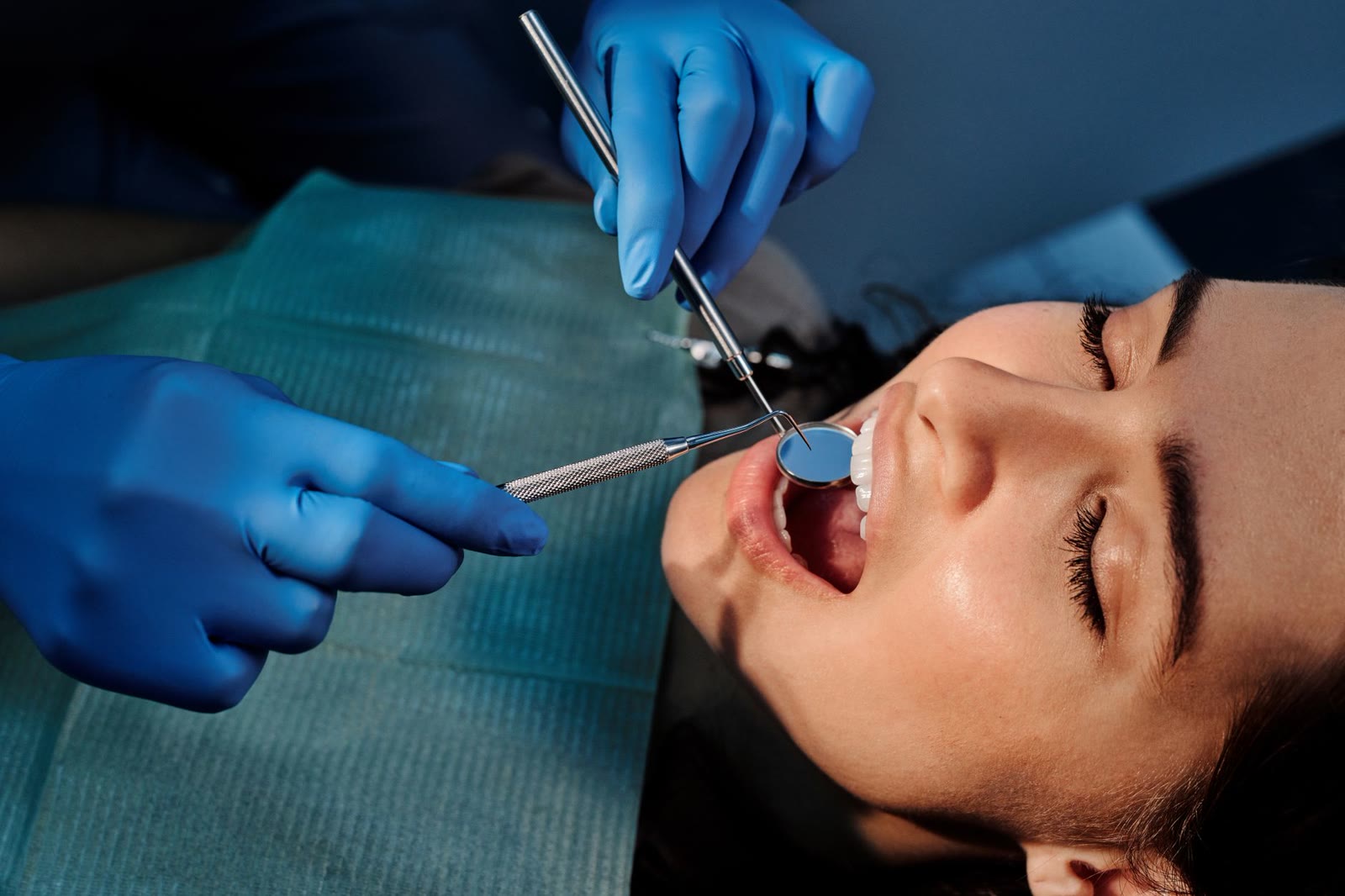
The ADA encourages dentists to screen patients for sleep-related breathing disorders as part of a complete medical and dental history. That means asking about symptoms such as daytime sleepiness, choking, snoring or pauses in breathing that a partner has noticed, and looking for risk factors the ADA lists, including obesity, high blood pressure and a recessed jaw (retrognathia). Our sleep apnea page says screening can begin at a regular checkup, where we ask how you are sleeping and look for clues in your mouth and airway.
Referral for diagnosis
If risk is found, the ADA says patients should be referred to the appropriate physicians for a proper diagnosis. That hand-off is the step that keeps the rest of the process safe.
Fitting a custom appliance
After a diagnosis, the dentist makes the appliance from impressions of your own teeth, so it fits your mouth and no one else’s. AASM says the most widely used type moves the lower jaw forward and down slightly to keep the airway open, and another type holds the tongue in place.
Following up
The guideline suggests that qualified dentists provide ongoing oversight, rather than no follow-up, to watch for dental-related side effects and changes in how your teeth meet. It also suggests that sleep physicians arrange follow-up sleep testing to confirm the appliance is working, and that patients return for periodic dental visits. NHLBI adds that you may need to see your dentist after six months and then every year, so the device can be checked, adjusted or replaced (NHLBI on living with sleep apnea).
What happens at a dental visit about sleep apnea?
It starts with a conversation, not a device. Here is the usual order of events:
- You tell us how you sleep.The NHS lists symptoms to mention: breathing that stops and starts, gasping, snorting or choking noises, loud snoring, and, in the day, tiredness, trouble concentrating, mood swings and morning headaches. A partner’s observations help.
- We look at your mouth and airway.We look for clues that fit the pattern you described.
- We talk about next steps.If more evaluation makes sense, we coordinate with your physician. A take-home sleep study can be a first step.
- A physician diagnoses.Your doctor reviews your testing and makes the diagnosis. AASM’s patient guidance says an appliance comes after that.
- If an appliance is recommended, we make it.With a diagnosis, we can work with your medical team to fit a custom appliance and make sure it is doing its job.
Where do you start? Pick the situation closest to yours
Six common situations, six honest next steps. One of them tells you to keep your CPAP, and that you may not need a dental device at all.
Where are you on the path right now?
Pick the line that sounds most like you. It is a planning aid for your next conversation with a doctor, not a diagnosis.
- 1Screen
- 2Diagnose
- 3Treat
- 4Follow up
Not sure where you are on the path? Talk it through with our team.
Ask about sleep apnea careWhen is a dental sleep appliance not the answer?
More often than you might think. An oral appliance is a good fit for some adults, and the wrong first move for others. Here are the situations that point elsewhere.
- You have not been diagnosed. Testing comes first, and a physician makes the diagnosis.
- CPAP works for you. The AASM guideline says CPAP should generally still be the first-line option because it is better at improving oxygen levels and reducing breathing interruptions. AASM’s patient site says appliances are most helpful in mild to moderate sleep apnea. Our guide to CPAP alternatives compares them side by side.
- You only snore. Rule out sleep apnea with a physician first. If your issue is more about a stuffy nose or mouth breathing, our guides to nasal strips and mouth taping cover what those can and cannot do.
- You are looking at an over-the-counter mouthpiece. AASM’s patient site says over-the-counter devices are not recommended for snoring or sleep apnea, and that you must be custom fitted for an appliance to work properly.
How do you choose a dentist for sleep apnea care?
Choose one who works with your sleep physician and can explain the follow-up. AASM’s patient site says dentists who work with a sleep team have special education in treating sleep apnea, so it is fair to ask about that training. Four questions will tell you a lot:
- Do you work with my sleep physician?The diagnosis and the testing come from the physician, so the two of you need to communicate.
- What training do you have in treating sleep apnea?Ask for a straight answer about your dentist’s own experience.
- Is the appliance custom and adjustable?That is what the guideline suggests.
- How will we follow up?You should leave with a plan for bite checks and a repeat sleep test.
Our sleep apnea page describes how we work: we coordinate with your physician, who handles the diagnosis, and once you have one, we work together with your medical team to fit a custom oral appliance and make sure it is doing its job.
Common questions
Can a dentist diagnose sleep apnea?
No. AASM’s patient guidance says a sleep doctor must diagnose you using a sleep study or a home sleep apnea test. A dentist can screen for signs, refer you to a physician and, after a diagnosis, fit an oral appliance.
Can a dentist tell if you have sleep apnea?
A dentist can notice signs and risk factors, such as snoring, tiredness and the shape of your airway and jaw, and can refer you to a physician. Only a sleep physician can confirm sleep apnea, usually with a sleep test.
Do you need a sleep study before getting an oral appliance?
Yes. AASM says a sleep doctor must diagnose you first, with a sleep study or a home sleep apnea test. A dentist then fits the appliance, and a follow-up sleep test may confirm it is working.
Can a dentist treat sleep apnea instead of CPAP?
Sometimes. The AASM guideline says CPAP should generally be the first-line option, but physicians should consider an oral appliance for adults who cannot tolerate CPAP or prefer another option. Talk with your sleep physician before changing treatment.
What kind of dentist treats sleep apnea?
A qualified dentist who works with a sleep team. AASM’s patient site says these dentists have special education in treating sleep apnea, so ask about training and whether they coordinate with your physician.
Will a sleep apnea mouthpiece change my bite?
It can. AASM lists temporary bite changes among the frequent minor effects, and permanent bite changes among the less common complications. That is why the guideline suggests dental follow-up to watch for them.
Ready to talk about your sleep?
Tell us how you have been sleeping, or whether you have ever been tested. We will explain the steps in plain language and coordinate with your physician.
Sleep apnea is diagnosed by a physician. This page is general education, not medical advice.
Want answers like this at the top of your search results?
Add Love To Smile as a Preferred Source on GoogleRequest an appointment
We would love to hear from you. Send us a message and our team will reach out to get you scheduled.