

You wake up and your tongue is stuck to the roof of your mouth. You reach for the water glass before you do anything else. Maybe your lips are cracked, maybe your breath is worse than it should be, and by mid morning it has mostly sorted itself out so you stop thinking about it.
Worth thinking about anyway. Saliva is not just moisture. It is the reason your teeth survive the night. It neutralizes acid, washes away food, and carries the calcium and phosphate that repair enamel between meals. When saliva drops for seven or eight hours every night, the math on your cavity risk changes, and it changes quietly.
What is actually happening while you sleep
Saliva production naturally falls overnight for everyone. That is normal. Your body is not expecting to process food at 3am. The problem is when something pushes an already low baseline down further, and then holds it there every night for years.
The people who get caught out by this are usually not the ones with an obviously dry mouth all day. They are the ones who feel fine by lunchtime, brush twice a day, do everything right, and still keep getting cavities along the gumline. That pattern, decay in places that were never a problem before, is one of the more reliable signals that the overnight environment has changed.
The most common reasons you wake up parched
You are breathing through your mouth
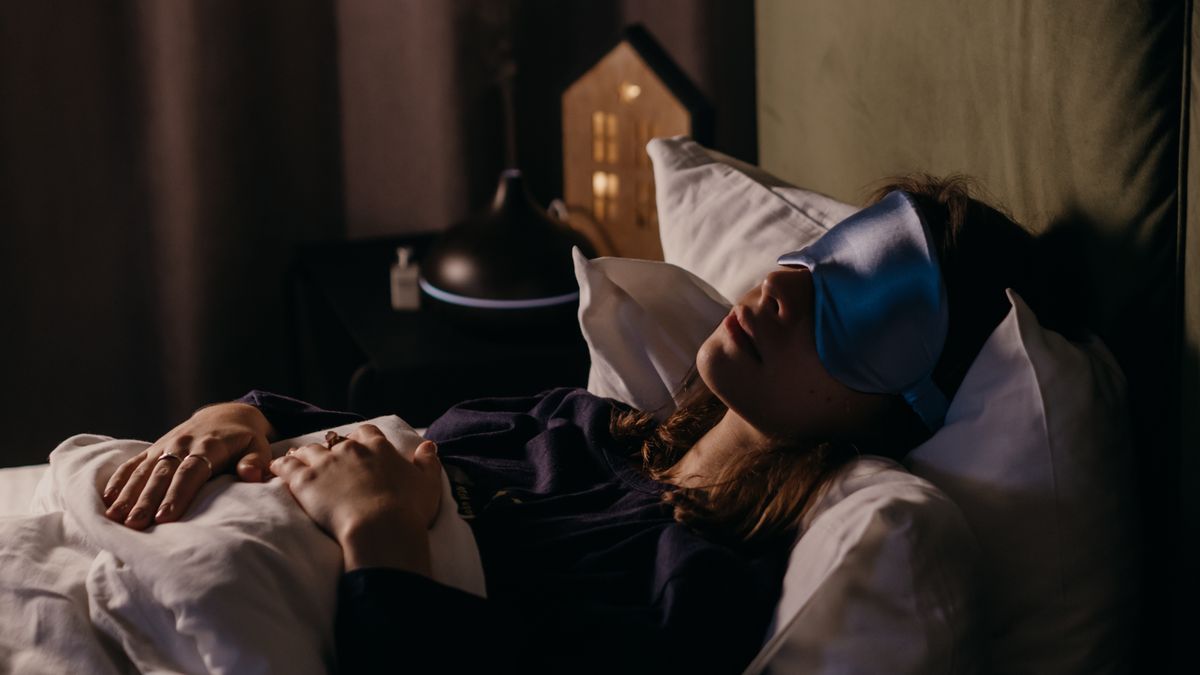
This is the biggest one, and most people who do it have no idea. Air moving across the tongue and gums all night evaporates whatever saliva is there. If you wake with a dry mouth and a mildly sore throat, that combination points at mouth breathing more than anything else.
It is often mechanical rather than habitual. A deviated septum, chronic congestion, allergies, or nostrils that collapse slightly on inhale will all push you to breathe through your mouth once you are asleep. We wrote about the simplest intervention for that in our guide to nasal strips and better breathing, and about the trend people ask us about most in our honest take on mouth taping.
Your medications
Hundreds of common prescriptions reduce saliva flow. Antihistamines, antidepressants, blood pressure medications, diuretics, muscle relaxants, and ADHD medications are the usual suspects. The American Dental Association lists dry mouth as one of the most frequently reported medication side effects in dentistry.
Nobody is suggesting you stop taking something you need. But if you started a new medication and your mouth changed, that is worth naming out loud at your next visit, because the response is to protect the teeth differently, not to change the prescription.
Alcohol or caffeine in the evening
Both are diuretics, and both are usually consumed in the window that matters most. A drink with dinner is a very different thing for your mouth than a drink at noon, because the dehydration lands right as your saliva was going to bottom out anyway.
Snoring and sleep apnea
Snoring is turbulent airflow through a partly obstructed airway, and it almost always involves an open mouth. If you snore and wake up dry and tired, those three symptoms belong to the same conversation. Untreated sleep apnea is a medical issue well beyond teeth, and dentists are often the first to notice the oral signs.
Age, hormones, and autoimmune conditions
Saliva production declines somewhat with age, and drops more sharply around menopause. Autoimmune conditions such as Sjögren's syndrome specifically target the salivary glands. If your dry mouth came on without a new medication and without a breathing change, this is the category to have looked at properly.
Waking up dry every single morning?
Talk to Our TeamIs your jaw behind those headaches?
Three questions. No email needed.
Why this is a dental problem and not just a comfort problem
Three things go wrong when saliva drops overnight, and they compound.
First, acid sits. After you eat, your mouth becomes acidic and saliva walks it back to neutral. With less saliva, that recovery takes much longer, and enamel spends more hours in the range where it dissolves.
Second, repair stops. Enamel is constantly losing and regaining minerals. Saliva is the delivery system for the regaining half. Take it away and demineralization runs unopposed.
Third, the bacterial balance shifts. The species that cause decay tolerate a dry acidic environment better than the ones that do not. Over months, the population in your mouth changes in the wrong direction.
The result tends to be decay at the gumline and between teeth, often in adults who have not had a cavity in fifteen years. It is also a common reason for morning breath that does not respond to brushing, and for dentures or partials that suddenly stop feeling comfortable.

What actually helps
Fix the breathing first
If you are mouth breathing, everything else on this list is a patch. Start with why your nose is not doing the job. Allergies, congestion, and nasal valve collapse all have straightforward answers, and clearing them often resolves the dry mouth without any product at all.
Water, but earlier than you think
Drinking water the moment you wake up treats the symptom. Being properly hydrated during the day is what changes the overnight baseline. Keep a glass by the bed for the middle of the night, and skip anything with sugar or citrus in it, because sipping those repeatedly in a dry mouth is close to a worst case scenario for enamel.
Xylitol before bed
Xylitol lozenges or gum stimulate saliva and are not fermentable by the bacteria that cause decay. Used in the last few minutes before bed, they give you a little more saliva going into the dry stretch.
A high fluoride toothpaste at night
If you are getting new decay and you have a dry mouth, this is the single highest value change. A prescription strength fluoride paste used as the last thing at night leaves a protective layer in place exactly when your natural defense is weakest. Ask us whether you are a candidate.
A humidifier in the bedroom
Modest but real, especially over a Kansas winter when indoor heating strips the air. It will not fix mouth breathing, but it makes the air you are moving less desiccating.
What to stop using
Alcohol based mouthwash. It gives you thirty seconds of freshness and then dries the tissue further, which is the opposite of what you need. Switch to an alcohol free rinse, ideally one with fluoride.
When to stop self treating
Get it looked at properly if the dryness is constant rather than just overnight, if you have trouble swallowing dry food, if your tongue is sore or fissured, if you are getting recurring mouth ulcers or oral thrush, or if you are suddenly getting cavities after years without any. Those point past habits and into something that needs a diagnosis.
Bring your medication list to the appointment. It is the fastest route to an answer, and it changes what we recommend more often than any other single piece of information.
Common questions
Why is my mouth so dry when I wake up but fine during the day?
That pattern almost always points to mouth breathing overnight. Air moving across the tissues evaporates saliva while production is already at its lowest. Daytime saliva returns to normal, so the symptom disappears and the overnight damage goes unnoticed.
Can dry mouth cause cavities?
Yes, and it is one of the strongest risk factors there is. Saliva neutralizes acid and redeposits minerals into enamel. Without it, acid lingers longer and enamel repair stalls, which typically shows up as decay along the gumline or between teeth.
Does drinking more water fix morning dry mouth?
It helps the symptom but rarely fixes the cause. If you are mouth breathing or taking a medication that reduces saliva, water only masks it. Keep water by the bed, but treat the underlying reason as well.
Is mouthwash good for dry mouth?
Alcohol based mouthwash makes dry mouth worse by drying the tissue further. An alcohol free rinse, preferably with fluoride, is a better choice, and a prescription strength fluoride toothpaste at night is more useful still.
Should I see a dentist or a doctor about dry mouth?
Start with whichever you can see sooner. Dentists often catch it first because the oral signs are visible. If it is constant rather than just overnight, or comes with difficulty swallowing or dry eyes, that warrants a medical workup too.
Dry mouth is fixable once you know the cause.
We can tell you whether yours is a breathing problem, a medication side effect, or something that needs a closer look, and what to do about it.
Love To Smile, Complete Family and Implant Dentistry.
Want answers like this at the top of your search results?
Add Love To Smile as a Preferred Source on GoogleRequest an appointment
We would love to hear from you. Send us a message and our team will reach out to get you scheduled.