


You floss, the string comes out pink, and the instinctive conclusion is that flossing is hurting your gums. So you stop, or you go gently around that spot, and the bleeding continues.
The conclusion is backwards. Healthy gums do not bleed when you clean them, in the same way healthy skin does not bleed when you wash it. If yours do, it is because that tissue is already inflamed, and the floss found it.

What the bleeding actually is
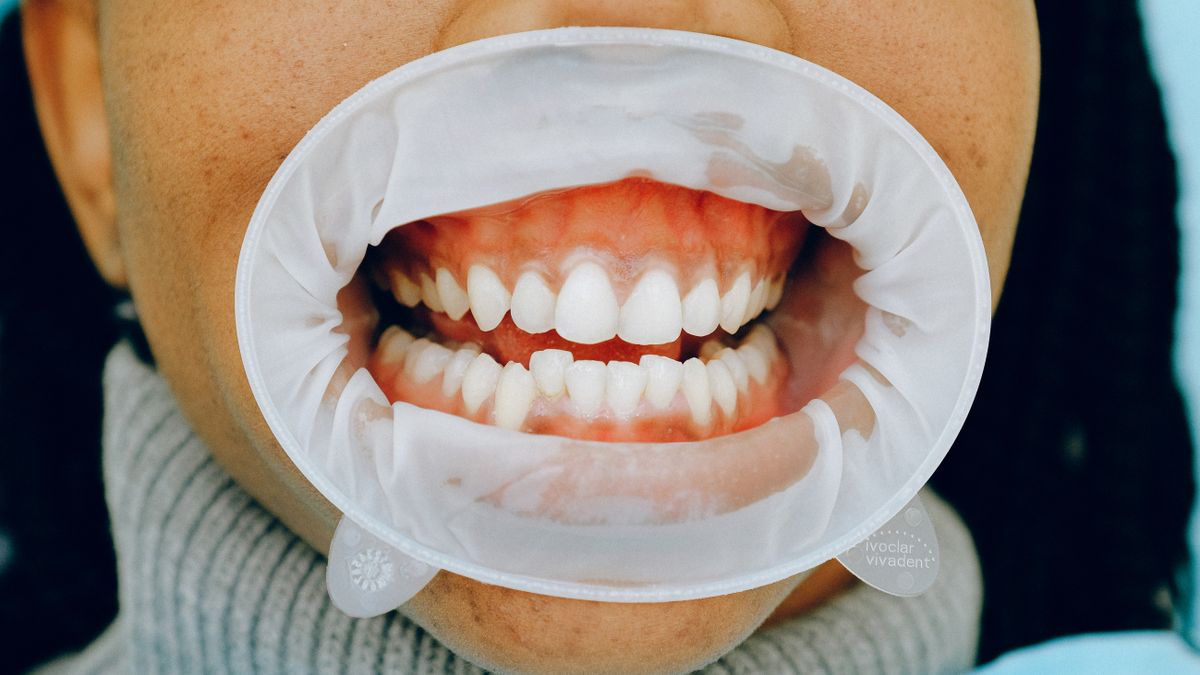
Plaque accumulates along and just under the gumline. Your immune system responds to the bacteria in it by sending blood to the area. The tissue becomes engorged, swollen, and fragile, with capillaries sitting close to the surface. That is gingivitis, and it is why the slightest mechanical contact makes it bleed.
Which means the bleeding is a map. It tells you exactly where plaque has been sitting undisturbed. The spots that bleed are the spots you have been missing, which is usually the same three or four places every time, and almost always between the back teeth.
The good news, and the deadline attached to it
Gingivitis is completely reversible. No permanent damage, no lasting consequence, nothing lost. Remove the plaque consistently and the inflammation resolves, usually inside two weeks.
The deadline is what happens if you do not. Sustained inflammation eventually breaks down the fibers attaching gum to tooth and starts dissolving the bone that holds the tooth in place. That is periodontitis, and unlike gingivitis it does not reverse. Bone that has gone does not come back. Treatment stops the progression and keeps what is left.
So bleeding gums are not a small cosmetic annoyance. They are the last stage at which this problem is fully fixable, which is the entire reason to take them seriously.
Why it is bleeding, specifically
You are missing the same spots
The most common reason. Brushing cleans three surfaces of each tooth and cannot reach the two that face the neighbors. Those contact points are where gum disease starts. If you brush thoroughly twice a day and still bleed between the molars, that is not a brushing failure, it is a coverage failure.
You have just started flossing
Genuinely common and genuinely fine. If you have not flossed regularly and you begin, expect bleeding for the first week or so as the inflamed tissue is disturbed and then heals. It should reduce noticeably by day seven and stop by around day fourteen. Bleeding that is unchanged after two weeks of consistent flossing is not the settling in period. That is a signal.
Your technique is doing damage rather than cleaning
Snapping floss straight down onto the gum cuts it. The tissue between teeth is a small valley, not a flat surface. Curve the floss into a C shape against one tooth, slide it gently under the gumline, sweep up, then repeat against the neighboring tooth. Two surfaces per gap, not one pass.
Hormones
Pregnancy, puberty and the menopause transition all amplify the gum response to the same amount of plaque. Pregnancy gingivitis is common and real, which is why cleanings during pregnancy matter more rather than less. Our page on dental care during pregnancy covers the specifics.
Medications and medical conditions
Blood thinners, including daily aspirin, increase bleeding from tissue that was already inflamed. They do not cause the inflammation. Some blood pressure and anti seizure medications cause the gums to overgrow, which creates spaces that are impossible to clean. Diabetes and gum disease worsen each other in both directions, and uncontrolled blood sugar makes gum disease considerably harder to control.
Smoking and vaping
Worth a specific warning, because smoking constricts blood vessels and suppresses the bleeding response. Smokers often have less bleeding with more underlying disease. If you smoke and your gums do not bleed, that is not evidence of health.
Bleeding that has not stopped after two weeks?
Have It Assessed
How well is your daily routine actually protecting you?
Three questions. No email needed.
How to actually stop it
Floss every day, including the spots that bleed
This is the counterintuitive part. The instinct is to avoid the bleeding areas. Those are precisely the areas that need cleaning, and gentle, consistent, correct cleaning is what makes them stop. Avoiding them guarantees the inflammation continues.
Consider interdental brushes instead
For most people with normal or larger gaps, small interdental brushes remove more plaque than floss and are much easier to use well. If you have never got on with flossing, this is likely the change that works. Ask us to size them, because the wrong size does very little.
Water flossers, with a caveat

Good for bridges, implants, braces and anyone with dexterity limitations. Useful, but generally less effective than physical contact at disrupting plaque on tooth surfaces. Best as an addition rather than a replacement.
Brush the gumline, not just the teeth
Angle the bristles at roughly forty five degrees toward the gumline so they get slightly underneath. Soft bristles, light pressure, two minutes. Hard scrubbing causes recession without cleaning any better.
Get the calculus removed
Once plaque hardens into tartar it is bonded to the tooth and no amount of brushing removes it. It is also porous, so it holds more plaque against the gum permanently. If you have tartar buildup, home care alone cannot fix the bleeding, and that is not a discipline problem.
When it is more than gingivitis
Get it assessed properly if bleeding continues beyond two weeks of consistent good cleaning, if your gums are receding or teeth look longer, if you have persistent bad breath that brushing does not touch, if there is pus or a bad taste, if any tooth feels loose or has shifted, if the gums are tender or swollen rather than just bleeding, or if you notice food packing into new spaces.
Loose teeth and pus mean the process has moved past the reversible stage and needs treatment now.
The part most people do not connect
Gum disease is a chronic inflammatory condition with a large surface area, and the association between it and cardiovascular disease, diabetes and adverse pregnancy outcomes is well documented. The National Institute of Dental and Craniofacial Research summarizes the current evidence.
The research is still working out how much is causal and how much is shared risk. Either way, bleeding gums are a visible sign of ongoing inflammation, and it is one of the easier kinds to remove.
If it has been a while since anyone looked, book a cleaning and say specifically that your gums bleed. It changes what gets checked. If dental visits make you anxious, our approach to dental fear explains how we handle that.
Common questions
Is it normal for gums to bleed when flossing?
It is common but not normal. Healthy gums do not bleed when cleaned. Bleeding means the tissue is inflamed from plaque sitting along the gumline. If you have just started flossing, expect bleeding for about a week as it heals, but it should stop within two weeks.
Should I stop flossing if my gums bleed?
No. Stopping guarantees the inflammation continues, because the plaque causing it stays put. Keep flossing gently and correctly, including the areas that bleed, and the bleeding usually resolves within one to two weeks as the tissue heals.
How long should bleeding gums take to stop?
With consistent daily cleaning, most bleeding from gingivitis settles within seven to fourteen days. Bleeding that persists beyond two weeks of good technique suggests either hardened tartar that needs professional removal or gum disease that has progressed further.
Can bleeding gums heal on their own?
Gingivitis, the early stage, reverses completely with proper daily cleaning and professional removal of any tartar. Periodontitis, where bone around the teeth has been lost, does not reverse. Treatment stops it progressing but the lost bone does not regrow, which is why acting at the bleeding stage matters.
Why do my gums bleed even though I brush twice a day?
Brushing cannot reach the surfaces between teeth, and those contact points are exactly where gum disease usually begins. Bleeding between the back teeth despite good brushing is a coverage problem rather than an effort problem, and it is solved with floss or correctly sized interdental brushes.
Gum disease is silent until it is not.
The early stage reverses completely. The next stage does not. A proper assessment tells you which side of that line you are on.
Love To Smile, Complete Family and Implant Dentistry.
Want answers like this at the top of your search results?
Add Love To Smile as a Preferred Source on GoogleRequest an appointment
We would love to hear from you. Send us a message and our team will reach out to get you scheduled.