


Anyone who has worn a loose denture knows the small pause before biting into an apple.
Snap-in dentures promise to end that pause. Whether they are worth it depends on your jaw, your health and how you feel about surgery. This is the honest comparison, including the cases where traditional dentures are the better fit.
What is the difference between snap-in and traditional dentures?
Traditional dentures rest on your gums and are held in place by suction, sometimes with adhesive. Snap-in dentures attach to dental implants in your jaw with small connectors that click. Both are removable.
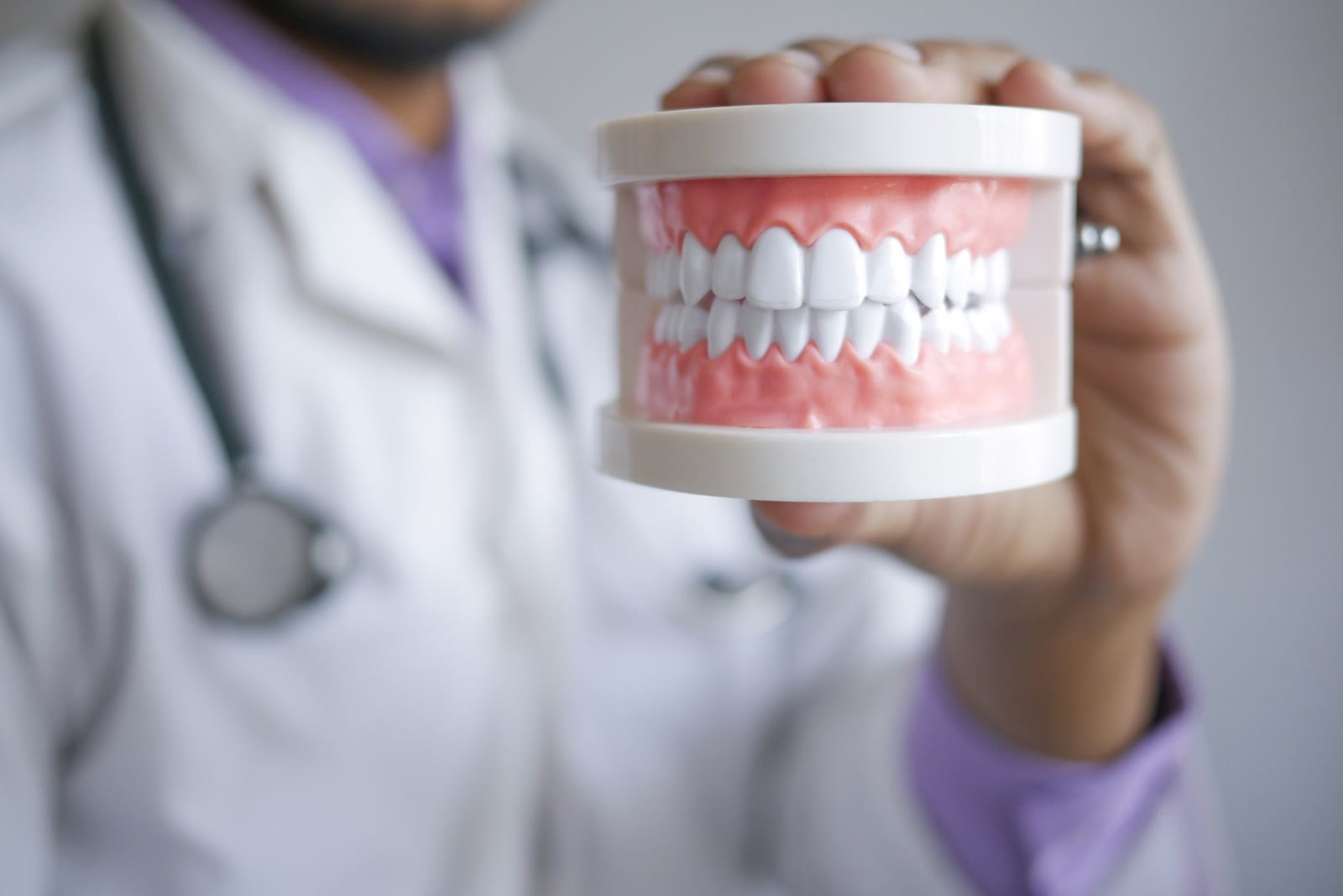
Traditional dentures
The American Dental Association describes a conventional denture as a full removable set made and placed after the remaining teeth are removed and the tissues have healed. An immediate denture goes in the same day the teeth come out, though it may need to be relined or remade once your jaw heals. Some wearers use adhesive. The ADA says to follow the directions exactly and to look for the ADA Seal (ADA guide to dentures).
Snap-in dentures
“Snap-in” is the everyday name. Dentists usually say implant overdenture or implant-retained denture. Our implant overdentures page describes them as still removable, which helps with cleaning, but held firmly by implants so they do not come loose. The ADA notes that an overdenture can sit on a few remaining natural teeth, and that implants can serve the same purpose.
A third option is a fixed full-arch bridge, which stays in place and is only removed by a dentist. That is a different treatment. Our dental implants page explains that implants can anchor either permanent or removable replacement teeth.
| Traditional dentures | Snap-in dentures | |
|---|---|---|
| Held in place by | Suction, and sometimes adhesive | Implants in the jaw, with small connectors that click |
| Surgery | None | Yes, to place the implants |
| Stability when you eat and talk | Can feel loose or unsteady | Studies rate it higher, mostly for the lower jaw |
| Before you have teeth | Exam, impressions, fittings, and healing if teeth are removed | X-rays, implant surgery, healing, then fitting |
| Cleaning | Comes out daily for cleaning | Also comes out for cleaning |
| What studies mostly cover | The standard that overdentures are compared against | A lower-jaw denture held by two implants |
Are snap-in dentures more stable than traditional dentures?
In studies, yes, mostly for the lower jaw. A systematic review in the Journal of Prosthodontic Research looked at 26 studies comparing conventional dentures with implant-retained overdentures (review abstract on PubMed). Overdentures held by two implants in the lower jaw earned significantly higher ratings for overall satisfaction, comfort, stability, speaking and chewing, and people chewed better in tests.
There is a catch worth knowing. Nearly all of those studies were about the lower jaw, and only one compared dentures in the upper jaw. That does not mean snap-in dentures are a poor choice up top. It means the strongest evidence is for the lower jaw, and averages are not promises for any one mouth.
If your lower denture is the one that slides when you eat, that is the situation the research speaks to most.
What “better” leaves out
Satisfaction ratings are averages of what patients reported. They cannot tell you how your own mouth will do, and a denture that is well made and well fitted can feel very different from one that is not. “Better” also depends on what you value. If your priority is the firmest bite, the research favors snap-in. If your priority is avoiding surgery, traditional dentures win by definition, and many people are happy with them.
What does it take to get each type?
Traditional dentures take fewer steps. Snap-in dentures add an exam of your bone, implant surgery and healing time before the denture connects. Neither is quick, so it helps to see the steps side by side.
Traditional dentures
- Exam and impressionsYour dentist takes measurements and makes models of your jaw.
- Healing, if teeth come outA conventional denture goes in after the gums heal, which may take several months.
- Denture fittedImmediate dentures can go in the same day teeth are removed.
- A few weeks to adjustNew dentures may feel awkward at first.
- Follow-up visitsYour dentist checks the fit and adjusts it.
Snap-in dentures
- X-rays and examThey show whether implants are an option for you.
- Implant surgeryImplants are placed in the jaw.
- Healing timeThe implants need time to heal before the denture connects.
- Denture fitted to the implantsThe denture snaps onto small connectors.
- Follow-up visitsYour dentist checks the fit and adjusts it.
What to expect with traditional dentures
Per the ADA, new dentures may feel awkward for a few weeks while your cheek and tongue muscles learn to hold them. Minor irritation, soreness and extra saliva are not unusual and should fade. You will need follow-up visits to check the fit, and the ADA says to call your dentist if irritation or soreness persists.
What to expect with snap-in dentures
At Love To Smile the process starts with X-rays to see whether implant overdentures will meet your needs. If they will, the implants are placed surgically, the area heals, and the overdentures are then fitted to them. Your dentist will give you the timing for your own case.
What about your jawbone and your health?
Your bone decides whether snap-in dentures are an option, and only X-rays and an exam can settle that. The ADA says that saved natural teeth under an overdenture can help preserve the jawbone and support the denture, and that implants can serve the same function.
Our dental implants page says implants can help preserve facial structure by preventing the bone deterioration that follows tooth loss. It also says a consultation is how we find out whether you are a good candidate, so your health and your bone are looked at together before anyone recommends surgery.
If an exam shows you do not have the bone for implants, that is useful information, not a dead end. Your dentist can explain what it means for your options, and traditional dentures stay on the table either way.
How do you care for each type?
Brush them every day, keep them moist when they are out, and keep your checkups. The ADA says to rinse dentures before brushing, use a soft brush and a non-abrasive cleanser so you do not scratch them, and store them in water so they do not warp. Brush your gums, tongue and the roof of your mouth every morning too, because dentures do not replace oral hygiene.
Snap-in dentures come out for cleaning like traditional ones. They also have small connectors, so ask your dentist what upkeep your setup needs and how often the connectors should be checked. Both types need regular exams, because the ADA notes your dentist should confirm they still fit properly. Mouths change, too. The ADA says an immediate denture may need to be relined or remade once your jaw heals, which is one more reason fit checks matter.
Which type of denture fits you?
Five questions will not replace an exam, but they can show you which way your own priorities lean. One of the results says traditional dentures may be all you need.
Which type of denture fits you?
Five questions, a result that can say traditional dentures are enough, and a clear next step.
Wondering whether snap-in or traditional dentures fit your mouth? We can look at both with you.
Book a denture consultWhen are traditional dentures the better choice?
Traditional dentures are the better choice when you want to avoid surgery, when a doctor advises against it, or when you prefer the simplest path. A well-made denture that fits well works for many people, and it is the option that needs no implant surgery.
If your current dentures feel loose, check one thing first. The ADA says to contact your dentist when dentures stop fitting well. An adjustment may solve a problem you assumed needed implants, and asking is simple. Cost is a real part of this decision, so bring it up at your consult along with your plan and financing questions.
What should you ask at a denture consult?
Bring these five questions to compare both paths in your own mouth:
- Do my X-rays show enough bone for implants?This decides whether snap-in is on the table.
- How many implants, and which connectors?Studies of the lower jaw most often looked at two implants, but your plan is your own.
- What are the steps and the healing time?Ask for them in order, for each option.
- What upkeep will I have?Ask about cleaning and how often the fit and connectors get checked.
- What if I am not ready for surgery?A good answer includes a traditional denture plan.
Our team offers dentures and partial dentures as well as implant-secured overdentures, so you can hear about both from the same office. Dr. Pedersen can look at your options in a single consultation.
Common questions
Are snap-in dentures removable?
Yes. Snap-in dentures click onto implants and come out for cleaning, which is what sets them apart from a fixed implant bridge that stays in place.
Are snap-in dentures the same as All-on-4?
No. Snap-in dentures are removable and held by implants. All-on-4 is a full-arch treatment where a fixed set of teeth is anchored to four implants and is only removed by your dentist. Ask which one your dentist is proposing.
How many implants do snap-in dentures need?
It depends on your jaw and your dentist’s plan. Studies of lower-jaw overdentures most often looked at two implants, and the ADA’s denture guidance does not set a number.
How long does it take to get used to new dentures?
The ADA says new dentures may feel awkward for a few weeks while the muscles of your cheeks and tongue learn to hold them. Some soreness and extra saliva are not unusual. Call your dentist if irritation or soreness persists.
Do traditional dentures need adhesive?
Not always. The ADA says some wearers use adhesive occasionally. If you do, follow the instructions exactly and look for products with the ADA Seal of Acceptance. Ask your dentist whether a better fit would make adhesive unnecessary.
Can everyone get snap-in dentures?
No. Your bone, your health and your readiness for surgery all matter. We start with X-rays to see whether implant overdentures will meet your needs, and a traditional denture remains an option if they will not.
Want a clear answer about your dentures?
Bring your questions and any X-rays you have. We will compare traditional dentures and implant-secured overdentures for your mouth, in plain language.
Whether implants are an option depends on an exam and X-rays. This page is general education, not a treatment plan.
Want answers like this at the top of your search results?
Add Love To Smile as a Preferred Source on GoogleRequest an appointment
We would love to hear from you. Send us a message and our team will reach out to get you scheduled.