

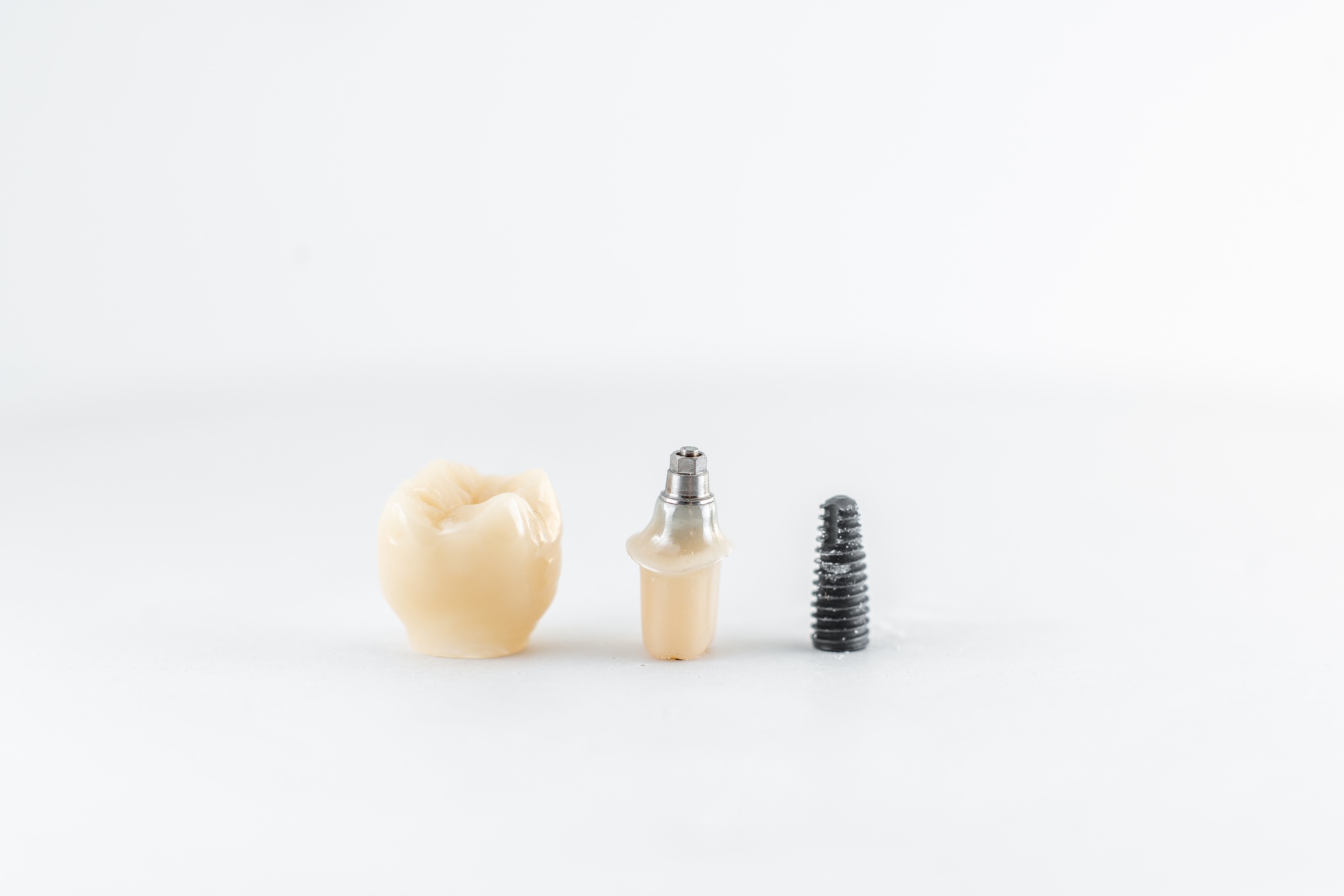
Single dental implant: $3,500–$6,000 all-in
In Johnson County, a single dental implant, including the titanium implant post, the abutment, and the final crown, typically costs $3,500–$6,000.
The range reflects: the brand of implant system used (some are premium), whether bone grafting is needed, and whether the crown is standard porcelain or zirconia.
Implant bridge (3–4 teeth): $7,000–$15,000
Replacing 3–4 missing teeth in a row with an implant-supported bridge typically uses 2 implants supporting a 3- or 4-unit bridge. Total cost: $7,000–$15,000, depending on materials and case complexity.
Compared to a traditional bridge that grinds down healthy adjacent teeth, the implant bridge preserves your natural teeth and lasts much longer.
All-on-4 full-arch: $20,000–$30,000 per arch
If you’re missing all the teeth in your upper or lower jaw, All-on-4 replaces an entire arch with as few as four strategically placed implants supporting a fixed bridge. Cost: $20,000–$30,000 per arch.
Both arches: $40,000–$60,000 total. Yes, it’s a major investment, but it’s also a 25+ year solution that restores 90%+ of natural bite force.
Bone grafting: $250–$3,000 if needed
If your jawbone has receded due to long-term tooth loss, you may need a bone graft before implants can be placed. Costs range from $250 for a minor socket preservation to $3,000+ for larger sinus lifts.
Our free 3D cone-beam consultation will tell you definitively whether grafting is needed.
What insurance covers (and doesn’t)
Most PPO dental insurance covers a portion of implant treatment, typically the crown component (sometimes the abutment), less often the implant itself.
With a $1,500–$2,500 annual maximum, most plans cover $1,000–$1,500 toward a single implant. We often spread treatment across two calendar years to maximize benefits.
Medical insurance occasionally covers implants if tooth loss was due to accident or qualifying medical condition. We help you submit appropriate documentation.
Financing the whole investment
Not sure if you are a candidate for implants?
Find Out in One VisitCareCredit and Sunbit offer 12–60 month financing at competitive rates. Many All-on-4 patients pay around $400–$600/month over 5 years, less than a car payment.
Health savings accounts (HSA) and flexible spending accounts (FSA) can both be applied to implant treatment.
Why in-house planning saves money long-term
Most implant cases bounce between an oral surgeon ($), a periodontist ($), and a separate restorative dentist ($), each charging separately, each scheduling separately.
We plan, place, and restore implants in-house. One coordinated team. One record. One bill. Less coordination tax, fewer surprises.
Related reading
- Dental Implants in Overland Park, In-House Placement
- Dental Implants vs Dentures: 2024 Guide
- Cosmetic Dentist in Overland Park
Frequently Asked Questions
Are dental implants worth it long term?
For most patients with healthy jawbone, yes, implants last 25+ years, preserve jawbone (which prevents the sunken-face look from long-term tooth loss), don’t slip, and restore 90%+ of natural bite force. Over 20 years, implants often cost less than repeated denture replacements.
How long does an implant procedure take?
Implant placement itself takes about 60 minutes. The post then integrates with the jawbone over 3–4 months. Then the abutment and final crown are placed. Total timeline: 3–6 months for a single implant.
Does implant surgery hurt?
Less than a tooth extraction, typically. Local anesthesia plus optional sedation (nitrous or oral) keeps the procedure calm. Most patients report minor soreness for 2–3 days, easily managed with ibuprofen.
Am I a candidate for implants?
Most healthy adults with adequate jawbone qualify. Even patients with significant bone loss can usually proceed after bone grafting. Uncontrolled diabetes and active smoking reduce success rates but don’t automatically disqualify.
Written by the team at Love To Smile Complete Family & Implant Dentistry, Overland Park, KS & Peculiar, MO. Last updated 2026.
Stop working around the gap in your smile.
Come in for an implant consult with Dr. Pedersen. We assess your bone and gum health, walk you through your options, and give you a timeline you can plan around.
Single implants, All-on-4, and full-mouth restoration handled in house. Financing options available.
Request an appointment
We would love to hear from you. Send us a message and our team will reach out to get you scheduled.